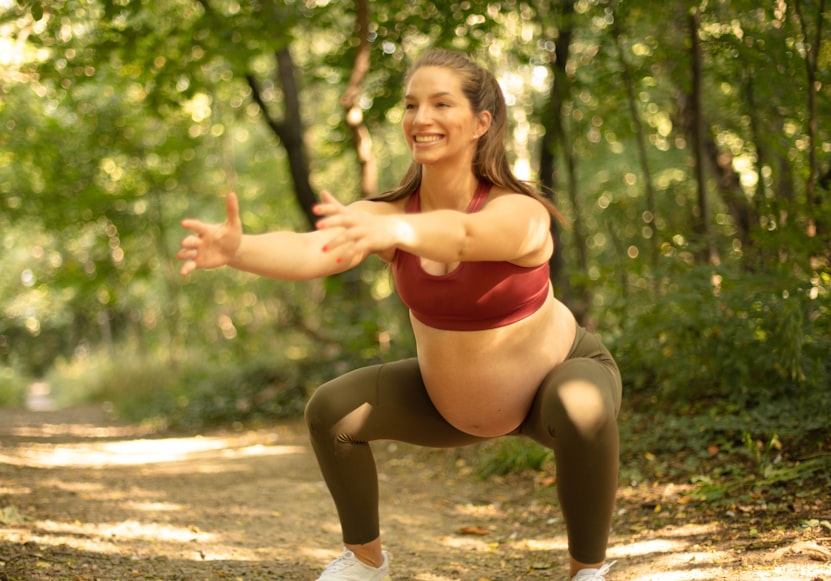
Kegel exercises for pregnant women are not just a flex. They are an effective instrument that brings real returns.
So if you’re currently pregnant and at the same time wondering how you can prepare your body for the big day, you’re definitely at the right place.
When it comes to pregnancy, Kegels are very useful. The peculiar thing about them is they strengthen and support the muscles that are situated along the pelvic area. When these muscles get enough strength, pushing your baby will be a walk in the park.
These muscles have a significant burden during pregnancy and childbirth. Now, by having them built up, it can help a great deal later.
In this article, we will discuss the 7 best Kegel exercises that expectant mothers will require in order to have a more convenient and seamless birth. The moves, however, are more than the basic squeeze-and-hold you could have heard about.
We have introduced differences and methods that are more in-depth and more in the heart and prepare your body for the task of work: labor. We also reassure you not to concern yourself. We will break them down step by step so that you can safely perform them at home even though you may not have ever performed one before.
Best 7 Kegel Exercises for Pregnant Women Who Want Easier Delivery
1. Basic Kegels
We will begin with the most popular exercise that people usually consider whenever they hear the term Kegel.
How to Do It:
• Sit, stand, or lie down at ease.
• Visualize that you are preventing urine flow.
• Make a squeeze with the same muscles you would do that with.
• Squeeze 5 seconds, relax 5 seconds.
• Repeat 10–15 times, 2–3 times a day.
Tips:
Don’t squeeze your stomach, thighs, or butt.
Normal deep breathing without stifling.
When you’re in doubt, put your hand on your belly; it must remain soft.
This practice creates awareness and control, which is the baseline of all Kegels in pregnancy.
2. Elevator Kegels: Build Muscle Control
Consider this to be a more conscious, multifaceted version of the simple Kegel.
How to Do It:
• You should imagine your pelvis muscles as an elevator.
• Contract them slowly one after another, just like the ground floor to the 5th floor.
• At each “floor,” pause and hold.
• And then discharge one floor at a time.
Benefits:
• Strengthen control in labor.
• Encourage gradual muscular involvement.
• Increase the awareness of the pelvic muscle layers.
This is considered as one of the best Kegel exercises by pregnant women who want to have better control of their fine muscles.
3. Bridge with Kegel: Add Some Core Activation
This one is a combination of pelvic floor and glute strength, which is best in the second trimester.
How to Do It:
• When lying on your back, bend your knees and keep your feet flat.
• Breathe in and out, squeeze your pelvic floor, and raise the hips.
• 5-second hold followed by slow downward descent.
• Repeat 10–12 times.
Caution:
• In case you become dizzy when you lie on your back, either do it on a slope or avoid it in week 20.
This combination will tighten and firm the lower part of the pelvis. It is excellent during pregnancy to remain mobile.
4. Kegel Ball Squeeze: Add Resistance for Strength
Place a small exercise ball or pillow between your thighs to provide feedback and resistance.
How to Do It:
• Sit up, bend the knees, and have the feet flat on the chair.
• Place the softball or pillow between your knees.
• Squeeze the ball softly as you do a Kegel.
• Hold for 5 seconds, then relax.
• Repeat 10 times.
Why It Works:
• Activation of the inner thigh and the pelvic floor.
• Build coordination.
• Offers something real to lean on.
It is an easy but effective method of working up your Kegels in the course of pregnancy.
5. Wall Sit with Kegel: Stability and Strength
This full-body exercise makes your lower body and the pelvic floor stronger.
How to Do It:
• Have your back to a wall.
• Squat down until you have your thighs even to the floor.
• Stand in this pose and do a Kegel.
• Hold for 5–10 seconds, then relax.
• Repeat 8–10 times.
Pro Tip:
• Keep your knees above your ankles, not above your toes.
• Keep your back straight; do not make an arch.
It is a great exercise when pregnant women are in their third trimester and require some fitness for labor.
6. Cat-Cow with Kegel: Breath + Movement
It is a yoga pose that promotes the well-being of the back and pelvis.
How to Do It:
• Get on your hands and knees.
Inhale, arch back (cow pose).
• After you have inhaled, exhale and round your back in a cat pose, then do a Kegel.
• Repeat for 1–2 minutes.
Why It Helps:
• Coordinates breathing with the use of the muscles.
• Cures backache during pregnancy.
• Teaches control in motion.
A very mild but effective Kegel exercise, which can be effectively used in the third trimester.
7. Tailor Sitting with Pulses: Relax and Strengthen
This pose opens the hips and is directed to deep pelvic floor muscles.
How to Do It:
• Sit on the floor, with the soles of your feet together and knees thrown outward.
• Sit tall, spine straight.
• Do 10-15 brief Kegel pulsations (rapid contractions).
• Rest and repeat.
Added Bonus:
• Opens the pelvis.
• Promotes more favorable fetal positioning.
It is among the best Kegel exercises that pregnant women can use to relax, as it works best in the evenings.
Related Article | 15 Mom Pooch Workout to Get Your Body Back Without Dieting
How Often Should You Do These Kegel Exercises?
The goal is 2-3 sessions per day, 10-15 reps per exercise. You do not need to do all of them simultaneously. You should spread them all throughout the day. Do it, like cleaning your teeth, traffic, or television.
Frequently Asked Questions
1. Do Kegel exercises prevent postpartum prolapse?
Yes. A strong pelvic floor is more resistant to prolapse of organs, which is achieved by providing support on the muscles and ligaments.
2. Is there any need to perform kegel exercises when my pelvic floor is already right?
If you suspect your pelvic floor is too tight, go and consult a pelvic floor specialist. When it is too tight, you may start experiencing some pains which are not good for your baby’s health.
3. Is it possible to perform Kegel exercises when walking?
Yes, though it is less easy to maintain good form. Begin by testing them when sitting or lying down, then proceed to test them as you engage in walking lightly.
4. Can my back pain be cured by kegel exercises?
Yes. When you regularly perform kegel exercises, you get support on your spine which will reduce the weight on your lower back
5. What time is the best to perform kegel exercises?
You can get optimum results from kegel exercises that are done in the morning and evening. Select occasions you will not forget, like after brushing your teeth.
6. Can kegel exercises prevent sneeze leaks from occurring when I am pregnant?
Yes. When you do these exercises all the time, the features of stress incontinence can be averted by a huge margin.
7. Is it alright to give up Kegels once I deliver the baby?
No. Keep doing them! They facilitate the healing process, control the bladder activity, and ensure long-term pelvic health.
Sew also | 7 Prenatal Exercise To Reduce Your Labor Time and Ease Delivery
Conclusion
Kegel exercises are not only useful when pregnant women perform them, but they are also necessary in order to train your body for birth. When you start making a habit out of these, then you are essentially working on the muscles, investing in a smoother delivery, a faster recovery, and a closer connection to your body.
These exercises do not need you to purchase any expensive gear. Nor do you have to spend hours in the gym. Doing these simple exercises for only a few minutes per day can get you some good results. Learn to pay attention to what your body needs and exercise regularly.