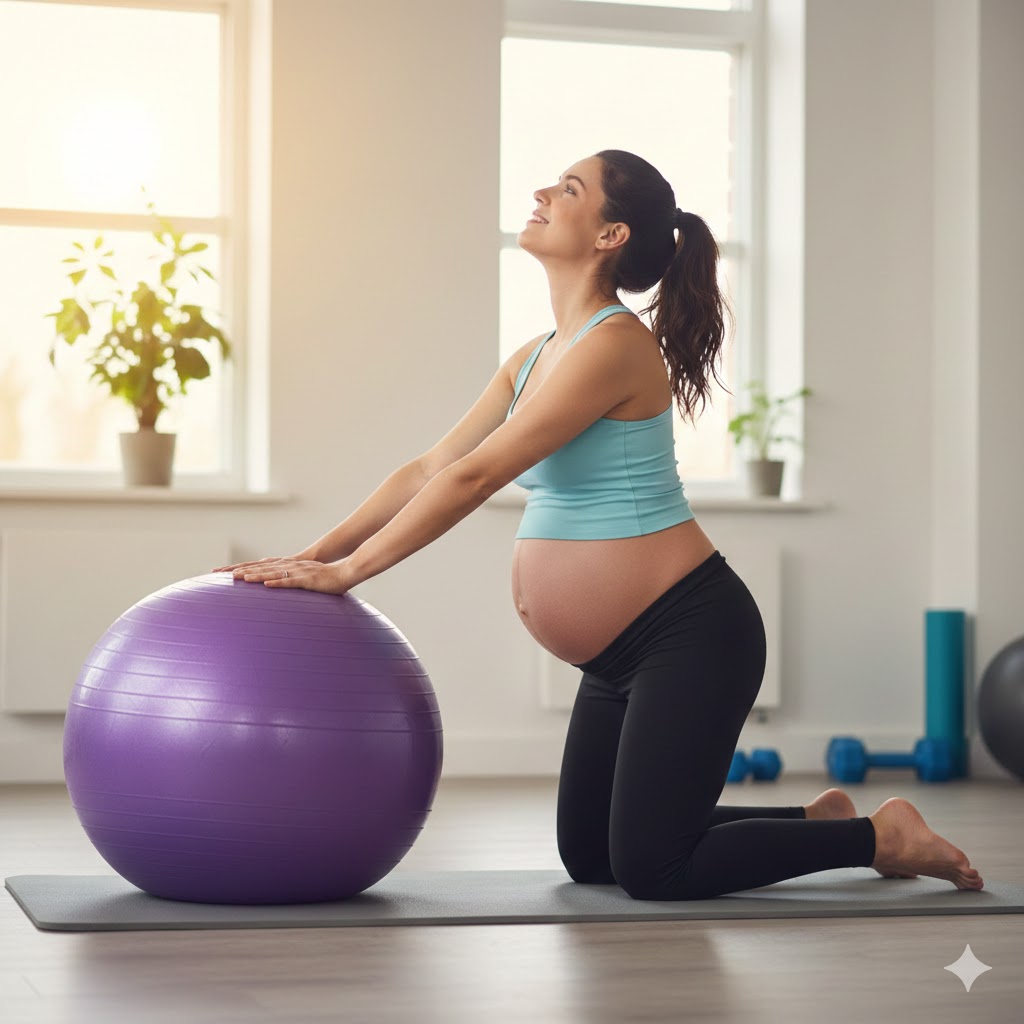
Birth ball exercises do a great job of keeping things moving during pregnancy and are a great way of feeling strong. They alleviate pain, enhance your posture and get your body ready to give birth. Own a birth ball and you have a safer and gentler solution to the problem of keeping fit during pregnancy. Even though the ball is soft it is stable and works with you and keeps you in touch with your breath, balance, and your developing baby.
During pregnancy everything changes. Your joints loosen, and your muscles grow to accommodate your baby. These changes could make you sore, stiff or unsteady. The birth ball exercises allow you to move around, and will make joints and the lower back less strained. These help in supporting hips, spinal tension, and even making your baby get into a better position of birth.
The most important thing of all is that you could do an exercise on a birth ball even in the living room, no gym, no trainer. Just a good ball, a lot of space and a few minutes a day. This guide provides side-effects-free poses that are appropriate in all levels of pregnancy. You feel better and more ready to face what lies ahead. Whether in your first trimester or just before your due date, these exercises will help you to feel improved and now well-equipped to face your impending childbirth.
The following are 15 safe birth ball exercises that make you fit, strong, and comfortable during pregnancy. The motions are easy to master and may be performed with either a partner or none. You just have to find some time and be willing to move.
Safe Birth Ball Exercises to Stay Fit While Expecting
1. Gentle Pelvic Tilts on the Ball
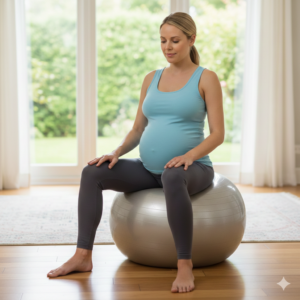
Sit on the ball, feet flat on the floor. Move the pelvis back and forward very slowly to experience your pelvic muscles and release the tension in the lower-back. The movement is small; however, it forms an additional space in the lower spine as time passes and develops a control that comes in handy during labor.
2. Hip Circles for Mobility
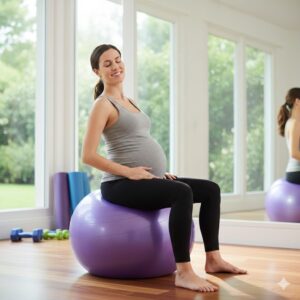
When you are sitting, move your hips round by and round. Withdraw in one direction and then in the other. This helps to relax tight hips, maintain a tailed pelvis and can help move your baby to an advantageous position during labor.
3. Sitting Bounces to Build Strength
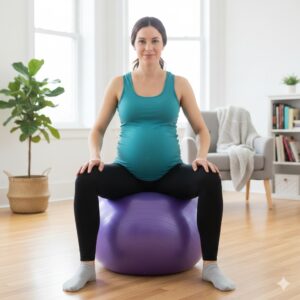
Sit erectly on the ball and bounce with your feet with caution up and down. The light stretches enhance fundamental and leg muscles and balance and coordination. The movement is very relaxing to many women particularly in the third trimester.
4. Wall Squats with the Ball
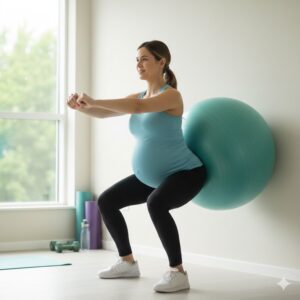
Have the ball between your lower back against a wall. Bend down gradually to a squat position and bend up again. With the legs and glutes being one of the safest exercises to work the lower body through pregnancy, the spine is held by the ball as you work.
5. Leaning Forward to Relieve Pressure
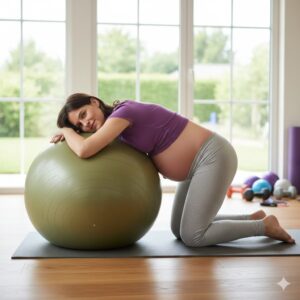
Get on your knees and lean forward over the ball placing your upper body upon the ball with your arms hanging over the ball. This posture relieves your lower back and helps your baby to be in a better posture.
6. Side-to-Side Rocking for Calm
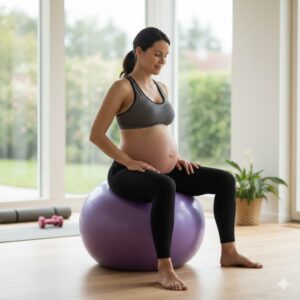
Seat on the ball and rotate hips left to right. The rocking is gentle, relaxing and helps take the tension out of stiff muscles, particularly when one is in distress or feels exhausted.
7. Supported Child’s Pose with the Ball
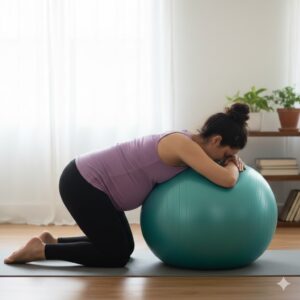
Kneel and put the chest and the arms over the ball. Let your hips sink back. It compliantly bends the back and hips without effort, a restful pause between exercises or at the end of the day.
8. Arm Circles While Seated
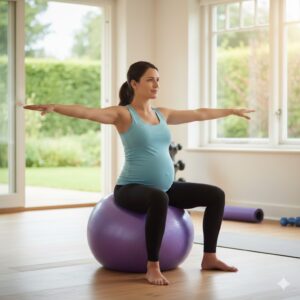
Sit and draw the arms sideways. Make slow circles. The movement expands the chest and shoulders, and improves the posture usually distorted by the weight of the belly.
9. Shoulder Rolls to Ease Tension
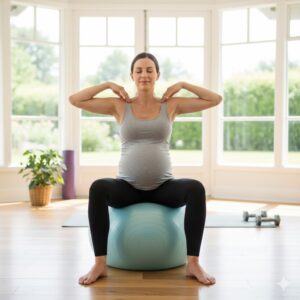
Standing in one position, raise shoulders to ears and roll over and down. Repeat. This will relieve the tight feeling on the shoulders and will give you freer breathing.
10. Cat-Cow on the Ball
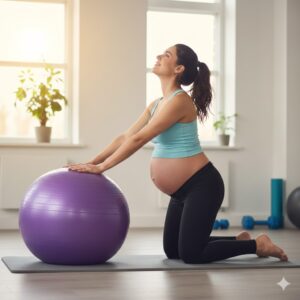
Kneel behind the ball putting palms on top. Round back mildly and arch your spine. This type of cat-cow is less taxing to wrists, spacious enough around the belly and encourages spinal movement and reduces back pain.
11. Chest Openers for Better Posture
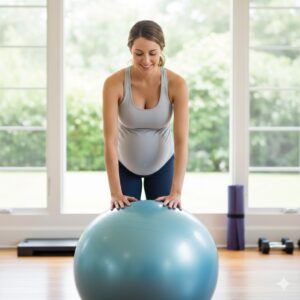
Position yourself at the back of the ball, and the palms on the top, bend forward a little and stretch your chest open. The stretch corrects shoulder crunching that accompanies a swelling belly.
12. Knee Presses for Inner Thighs
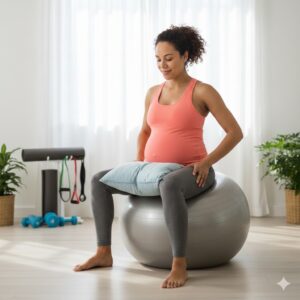
Seat on the ball with the feet flat and the knee bent. Get a pillow between the knees and squeeze in and squeeze out. The exercise makes inner thighs stronger and helps in pelvic stability.
13. Ball Walkouts for Core Strength
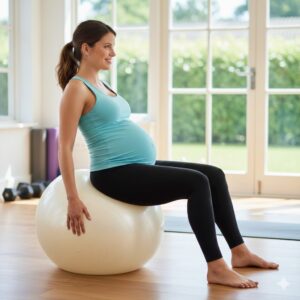
Seat yourself on the ball and push the feet forward, so that the ball rolls under your back into a half-reclining attitude. Return upright. This involves core and glutes and this makes you become used to moving with the ball.
14. Supported Bridge with the Ball
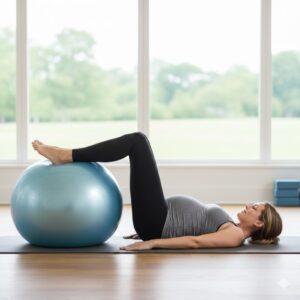
Bend knees, have feet on the ball as you lie on your back. Press feet, push hips then slowly put down. The workout also supports glute and hamstring muscles. Should be done during the second trimester and not during the third trimester.
15. Gentle Back Rolls for Release
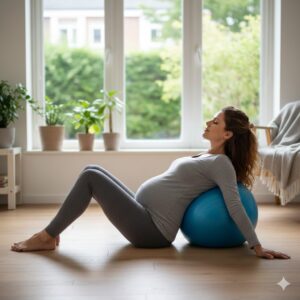
Position yourself on the floor with the ball in the back. Tilt backward pushing your back over the ball. Allow your arms to reach out to the right and the left. This soft movement opens your back, chest and helps to increase breathing.
Frequently Asked Questions
1. What is the most appropriate time to begin the birth balls exercises?
The best place to start is during your first trimester. However it is always important to consult your provider first. Most importantly when pregnant with a high-risk pregnancy.
2. What is the duration of birth ball exercises to be undertaken per day?
Start with 10‑15 minutes daily. The more you become comfortable, the more time you can spend or add some short sessions.
3. What is the size of the birth ball to be used?
Sit with your knees bent at the same level as your hips or a little lower. A 65-cm ball is effective with a majority of women.
4. Is there any birth ball exercise I should not perform?
Laying flat on your back during the third trimester is to be avoided. Also avoid the movements that seem to be uncomfortable or cause some pressure to the abdomen.
Conclusion
Birth ball exercises are a safe method of keeping healthy during pregnancy. They help you in changing your body, relieving common pain, and preparing you to bear a child. You do not have to have any fancy equipment or the membership of a gym. Just use a ball, some place and some time to workout.
These soft gestures can assist you to be more improved, attached, and at ease with your pregnancy journey. Birth ball exercises can be a relaxing activity, which can be practiced daily with the passage of time.
You may be in the first trimester or may be counting the days when you meet your baby, but with a birth ball you will still remain active in a manner that your body will be comfortable with. Trust your instincts. Make good choices of movements. And know that any breath and every stretch and every bounce shall put in progress, a very easy delivery.