
The correct prenatal exercise will not only keep you fit but can also influence the course of your child’s delivery.
These movements can make a difference by assisting your infant to get into the most favorable position and providing your muscles with the strength and stamina necessary to exert strong and efficient pushing. You do not have to be an athlete or a yoga expert to do these.
In our article, we will take you through seven prenatal exercises that can actually make your labor shorter and enable you to have a smoother delivery. These exercises help your body to change, alleviate normal pregnancy pains, and warm up to the great event.
Prenatal Exercises To Reduce Your Labor Time and Ease Delivery
1. Deep Squats
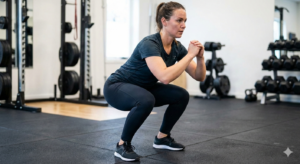
This exercise is very important because it opens up your pelvis in a natural way. It is known for strengthening your legs, hips and pelvic floor. These can come in handy when it’s time to deliver your baby.
How to Do It:
- Keep your feet a little bit wider than your hips.
- Squat down, keeping the back straight.
- Wait a couple of seconds, and get back on your feet.
- Repeat for 10 gentle reps.
When you do this all the time, your baby will fall into the right position and remain there until it’s time for it to come out.
2. Cat-Cow Stretch
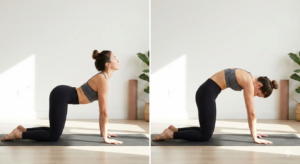
This yoga-based movement enhances back mobility and alleviates back pain as well as aids the positioning of fetuses.
How to Do It:
- Begin on hands and knees in a tabletop position.
- Breathe in, tilt the back, and tilt the pelvis high (cow).
- Breathe out, hump your back, and tuck your chin and pelvis.
- Repeat 10–15 slow, controlled reps.
When you do this correctly, your spine will become flexible and remove any tension that your weight may bring.
3. Prenatal Walking

This one is very easy and it’s safe for most pregnant women.
How to Do It:
- The goal is to take 20-30 minute daily walks at a normal pace.
- Sit or stand tall. You should be relaxed and have an engaged core.
- Take breaks if you feel tired.
The primary function of this particular one is to provide you stamina. It also helps with pushing your baby down since gravity will take it’s toll while you walk.
4. Butterfly Stretch
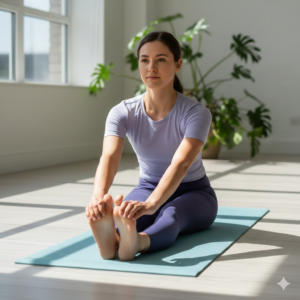
The seated stretches will assist in widening your hips and your hips play a very important role in delivering.
How to Do It:
- Sit with knees and feet touching.
- Keep hands on feet and ensure that you push your knees downwards.
- Keep still for 30 seconds and repeat three times.
Squeezed hips increase the difficulty in labor. This ease measures up your pelvis and makes you relaxed during the contractions.
5. Wall Sits
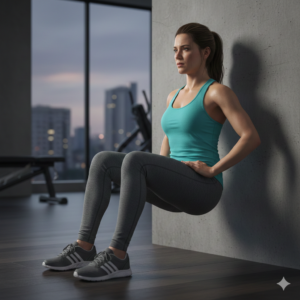
Mimic a supported squat. This particular exercise will build up your endurance which is very important in labor. It will toughen up your thighs when you do it all the time.
How to Do It:
- Place your back on a wall.
- Bend down into a squat with the thighs parallel to the floor.
- Wait 30 seconds, and follow slowly up.
- Repeat 3–5 times.
This type of endurance is good for training your lower body and will also develop your mental concentration. It will ultimately make you get used to the posture you’ll be using for your labor
6. Kegel Exercises
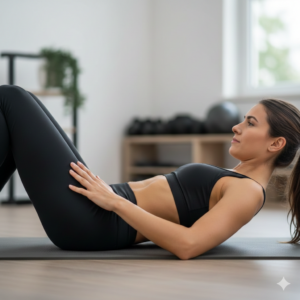
Kegel exercises ultimately strengthen your uterus and bladder. When they are tough enough, you get the physical ability to push more than normal which will lead to a faster baby delivery
How to Do It:
- Tighten your pelvic floor (as urine does).
- Pause 5 seconds, and release.
- Do ten reps three times a day.
Good pelvic floor muscles allow you to push better and heal quicker after childbirth and minimize the chances of tearing.
7. Pelvic Tilts
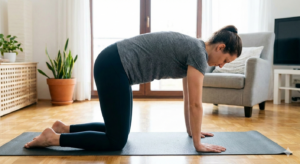
The pelvic tilts are easy, mild, and very effective. They tighten your core, alleviate lower back pain, and assist your baby to be in a good birth posture.
How to Do It:
- Get on hands and knees and position oneself in a tabletop pose.
- Inhale, allow your belly to drop a little, lifting your tailbone.
- Breathe out, and draw your belly back towards the spine.
- Repeat slowly for 10–15 reps.
This is a maneuver that eliminates the spinal pressure, positions the head of the baby according to your pelvis, and engages the abdominal muscles that play a very important role during delivery.
Read more | Workout For Women Who Want To Balance Career And Fitness
What Makes These Prenatal Exercises Different?
These exercises are not only about being fit. All were selected to meet the particular physical needs of work, aiming at:
Pelvis position to allow the baby to swing down naturally.
1. Long-term labor muscle endurance. Mobility to make shorter deliveries.
2. Mental concentration to remain extensive during contractions.
So when you do these exercises all the time, you get to train your muscle memory too. When your muscle memory is trained well enough, you will be used to the positions that you’ll be needing to undergo on the day of your delivery.
When Should You Start Prenatal Exercise?
The earlier, the better. A majority of pregnant women may start prenatal exercise during the first trimester, although it has to be approved by a healthcare provider. If it’s past that time and you haven’t started, you can still take advantage. You can still start in your second or third trimester.
It is very important that you do away with the positions or exercises that are painful for you. You only need consistency in doing the easy ones.
How Prenatal Exercise Impacts Baby’s Position
Another of the lesser advantages of prenatal exercise is that it may assist your baby in attaining an ideal position within the womb. Frequent motions stimulate the infant to turn head-down and assume the anterior position, which is ideal during delivery.
Tilts and cat-cow stretches of the pelvis are also exercises that open the pelvis and provide the baby with a larger space. Squatting and walking exploit the force of gravity to direct the baby down the passage, and this can eliminate complications, and labor can be shortened.
See also | Affordable Homemade Baby Food Recipes That Are Nutritious and Safe
Frequently Asked Questions
1. Will I be able to undergo prenatal exercises when I haven’t being doing them before?
Yes. A lot of these exercises and gentle and you do not have to be a fitness coach to do them. It is important to start slowly, listen to the body, and start gradually.
2. Is it safe to engage in daily prenatal exercise?
Yes. The ones such as walking, stretching, and pelvic tilting can be done every day.
3. What are the things I must not do when doing prenatal exercises?
After you have passed your first 3 months, do not do the ones that include deep twists or the ones that require you to lie flat on your back.
4. Are prenatal exercises effective in back pain treatment?
Absolutely. Most of the above exercises, and in particular the pelvic tilts and cat-cow, will help take off the pressure on your spine and are also helpful in maintaining good posture.
5. Does prenatal exercise minimize C-sections?
That is not always the case. But according to deep research, these exercises can reduce the need for a C-section.
6. Will prenatal exercises make my postnatal recovery quicker?
Yes. Powerful muscles and better circulation of prenatal activity will make you heal faster and recover more easily.
Conclusion
Pregnancy is an adventure into changing body, mind, and life. One of the most feasible methods of sustaining yourself on that path is through prenatal exercise. These seven exercises are not only about being fit, but they are also about getting your body ready for one of the most powerful things that you will ever experience.
Overall, with the help of prenatal exercise, you can improve your observations of short and smooth labor and be more grounded. This also makes you trust your body.
So start small. Listen to your body. Stay consistent. Believe in each squat, stretch, and step, and you will be one step away from a powerful birth.